Nasa · Cauca · Guide & Ambassador
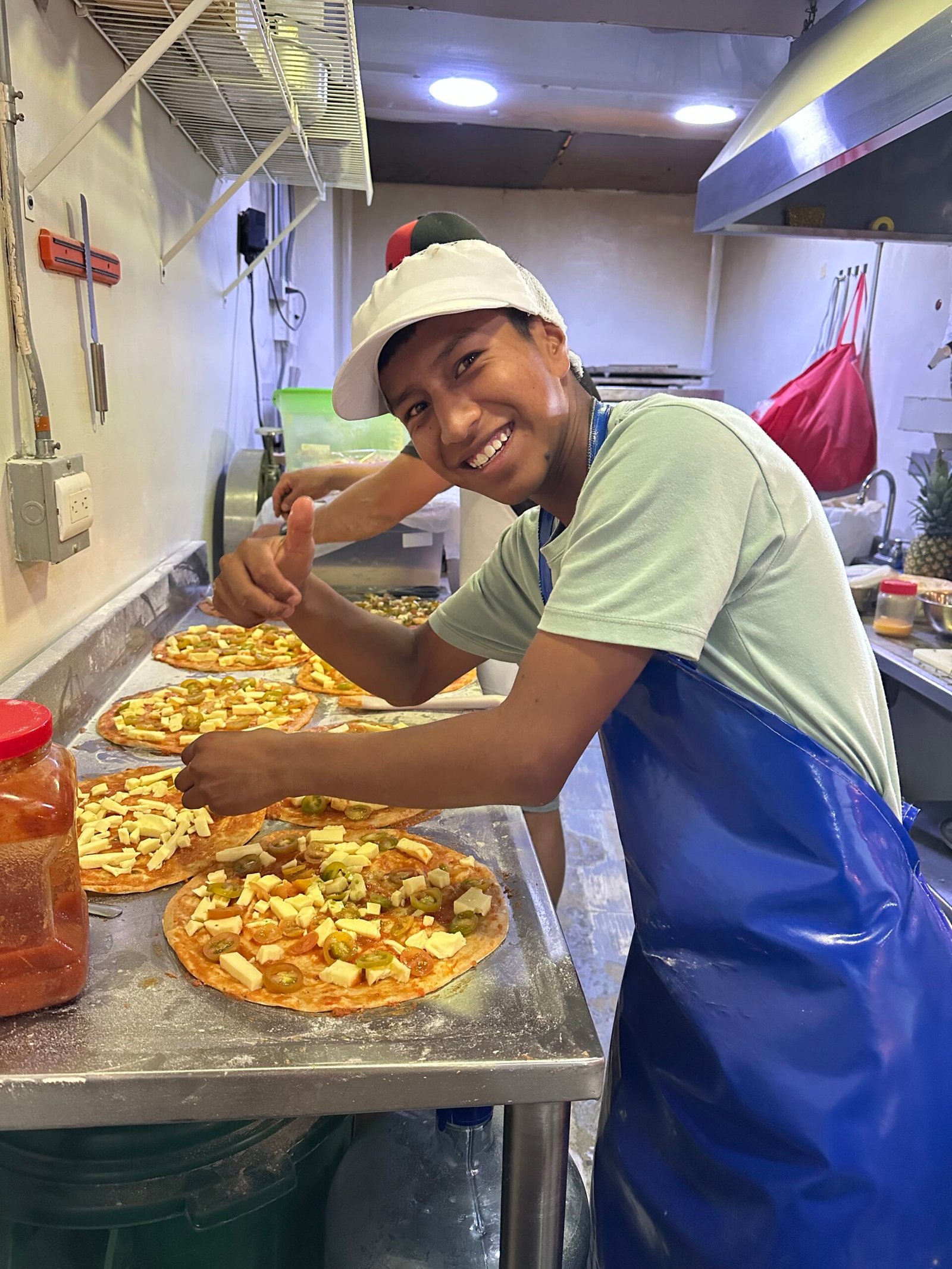
Deivin is a Nasa man from the Cauca department — one of Colombia's most historically significant indigenous territories. At Dulce Amazónica, he is both an ambassador and a working member of the team: in the kitchen preparing Amazonian foods, in the space connecting visitors to community, and on the trail as a guide for Mountain Bike Colombia.
That combination — cultural ambassador, food practitioner, expedition guide — is not unusual for the people who make Dulce Amazónica work. The embassy model functions because ambassadors like Deivin move fluidly between roles, carrying their community's knowledge into every context they enter.
In the kitchen, Deivin brings the practical knowledge that comes from growing up in a community where food is not separated from identity. On the trail, he brings the physical familiarity with Colombian terrain — mountain and jungle alike — that only comes from living in it.
Community: Nasa (Páez)
Territory: Cauca, Colombia
Role: Ambassador, Kitchen Team, MBC Field Guide
Guide with Mountain Bike Colombia
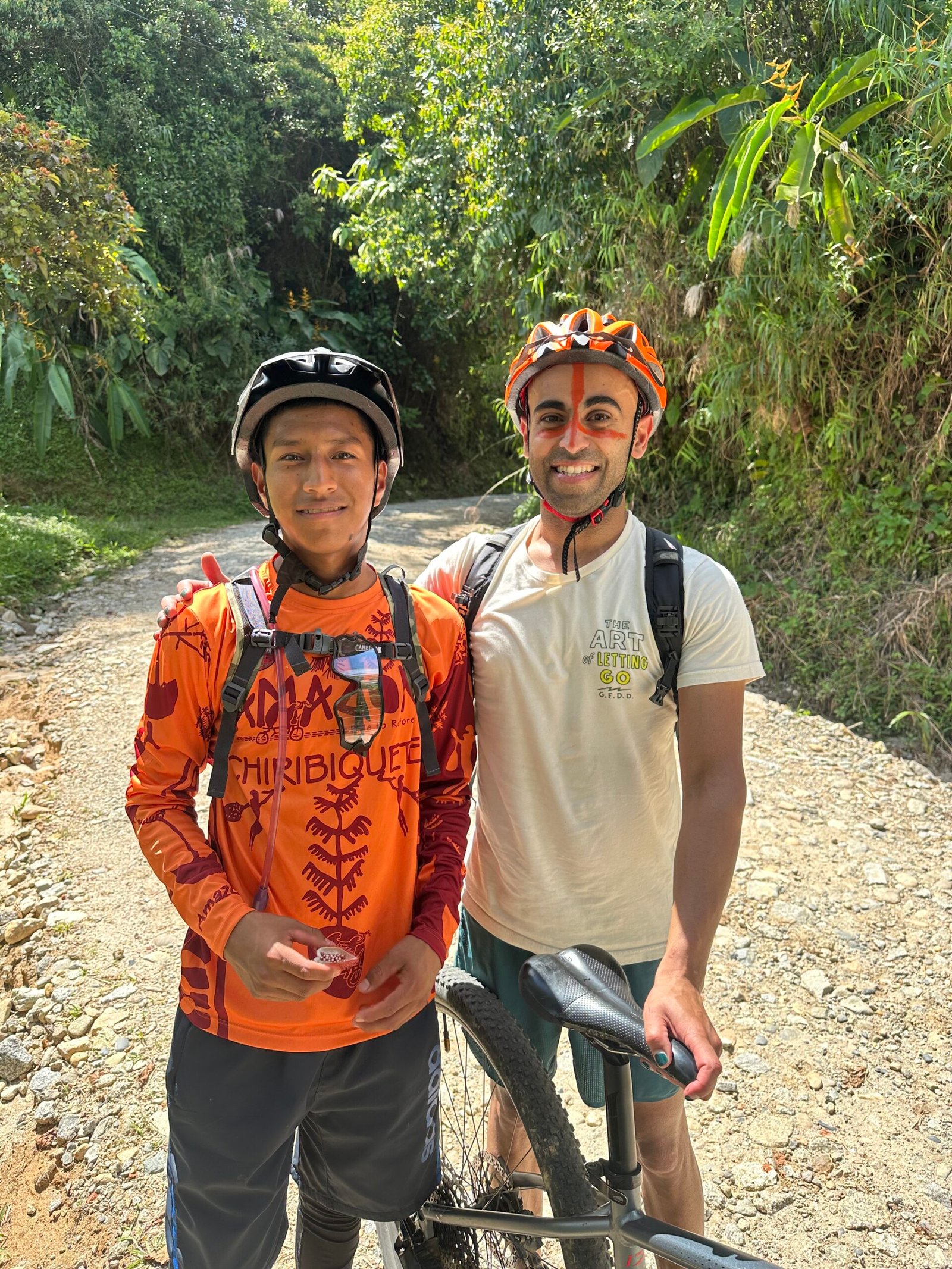
As a field guide with Mountain Bike Colombia, Deivin rides routes that connect Colombian landscapes to the communities living within them. The Cauca region where he grew up — mountains, river canyons, cloud forest edges — is some of the most demanding and visually extraordinary terrain in the country. Deivin knows it from the inside: not as geography to be navigated, but as territory that carries meaning.
On MBC expeditions, guides like Deivin are the reason the riding is more than sport. They create the conditions for visitors to encounter Colombia's landscapes and communities at a pace that allows understanding — slow enough to notice, present enough to connect.
The same sensibility he brings to the trail he brings to Dulce Amazónica: a willingness to be present, to share what he knows, and to trust that the exchange is worth having.
The Nasa People of Cauca
The Nasa — also known historically as the Páez — are one of the largest and most politically organized indigenous peoples in Colombia. Their ancestral territory is the department of Cauca: the high Andes, the Tierradentro canyons, the upper Páez and Cauca river valleys, and the cloud forests that descend toward the Pacific and the Amazon foothills. This is mountain territory — steep, ecologically complex, and deeply connected to the communities that have lived in it for centuries.
In 1971, Nasa leaders founded the Consejo Regional Indígena del Cauca (CRIC) — one of the most influential indigenous rights organizations in Latin American history. CRIC established the model for organized territorial defense, bilingual education, and collective governance that would inspire indigenous movements across the continent. The Nasa did not wait for recognition. They organized, articulated their rights, and built the institutions to defend them.
The Nasa concept of la minga — collective community labor toward a shared purpose — has become one of the most widely known expressions of indigenous community values in Colombia. A minga is not voluntary: it is an obligation of community membership, and what gets built through it belongs to everyone.
Nasa communities continue to navigate armed conflict, displacement pressure from coca cultivation economics, and the persistent threat of violence against community leaders and territorial guards. The guardia indígena — the Nasa's own unarmed territorial protection force — has become a symbol of non-violent resistance recognized internationally. Their presence in Cauca is not precarious. It is deliberate, organized, and centuries deep.
Nasa Yuwe and the Knowledge It Carries
The Nasa language — Nasa Yuwe — belongs to the Paezan language family and has no established relationship to any other known language group. It is spoken by approximately 60,000 to 80,000 people across Cauca and neighboring departments, making it one of the larger indigenous languages in Colombia by speaker population.
Nasa Yuwe encodes ecological knowledge specific to the Cauca highlands: categories for terrain types, water systems, plant relationships, and weather patterns that have no equivalents in Spanish. The bilingual education programs established by CRIC in the 1970s — among the first in Colombia — were built on the principle that learning in Nasa Yuwe is not a concession to tradition. It is access to a different way of knowing the world.
Deivin carries this context with him. He is not a representative of a disappearing past. He is a member of a living community that has been fighting for its future — and winning significant parts of that fight — for more than fifty years.