Wacara · Vaupés · Amazon Embassy
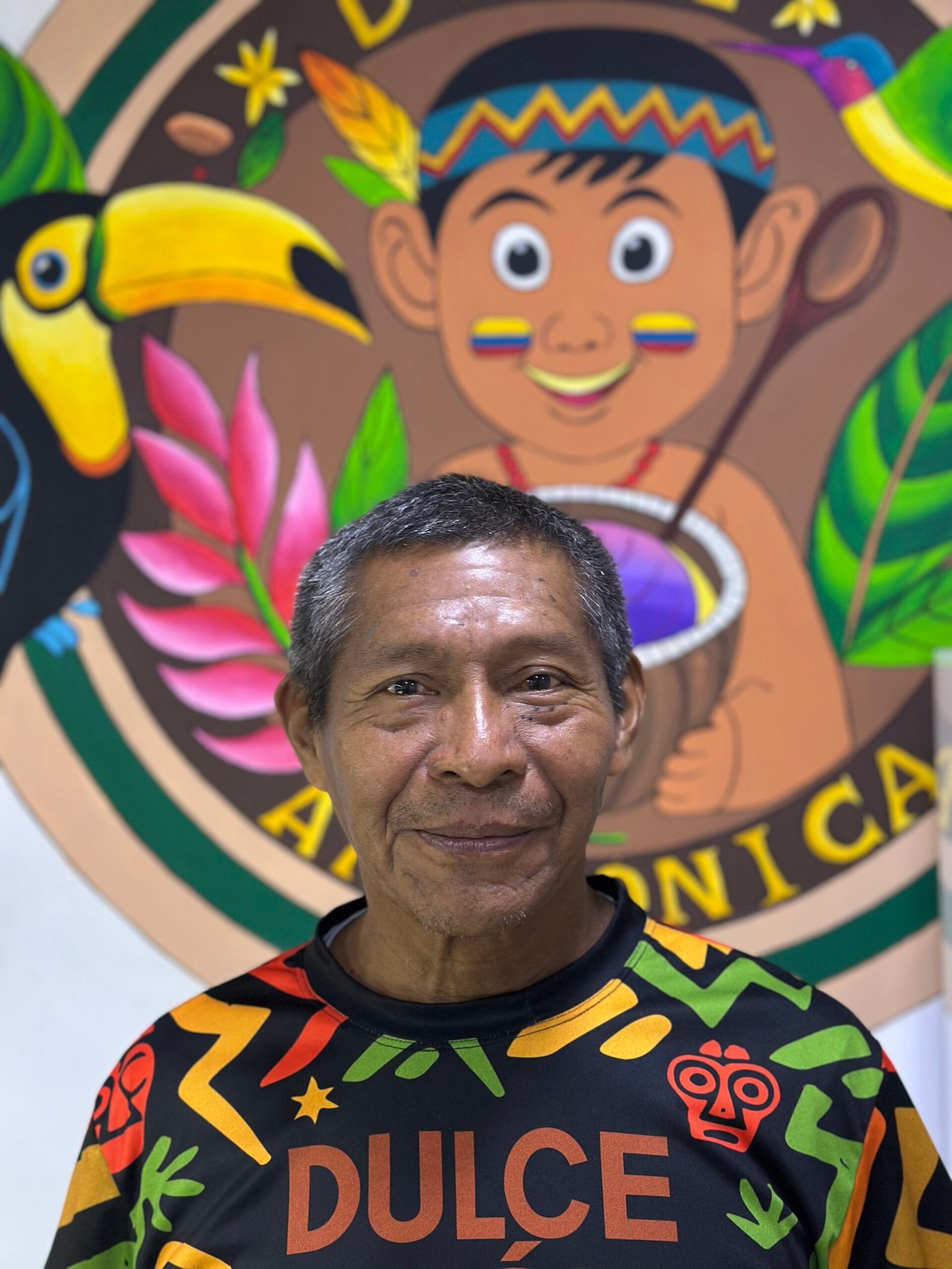
Samuel López Pérez is a Wacara man from the Vaupés — one of the smaller Tukanoan-speaking peoples of eastern Colombia, whose knowledge of the Vaupés river system, its forest ecology, and its ceremonial life is as complete as that of any of their better-known neighbors.
Samuel brings Wacara artisan work to Dulce Amazónica: the objects, the knowledge of the materials that go into them, and the authority to represent a community that has rarely had someone in a place like Guatapé speaking on its behalf.
He is comfortable with visitors — patient with questions that come from genuine curiosity, direct with those that come from shallow fascination, and entirely clear about the difference. Spending time with Samuel is spending time with someone who has decided that the exchange is worth making, on the terms he sets for it.
Community: Wacara
Territory: Vaupés, Colombia
Role: Cultural Ambassador, Artisan
The Wacara People of the Vaupés
The Wacara are a Tukanoan-speaking people of the Vaupés department in eastern Colombia, part of the complex social and linguistic ecosystem that makes the Vaupés one of the most remarkable cultural regions on earth. Like their Tukanoan neighbors, the Wacara organize their identity around language, clan, and river territory — the specific stretch of river a family is from carries as much weight as any surname.
The Wacara practice linguistic exogamy — the rule that you must marry someone who speaks a different language — which means a typical adult has grown up with fluency in their own language, their spouse's language, and the languages of neighboring groups. Language in the Vaupés is identity: it tells you who someone is, where they come from, and who their community obligations are to.
Wacara artisanal work — including ceramics, woven goods, and painted objects — reflects the ecological and symbolic knowledge of the Vaupés forest. The patterns and materials carry meaning that goes beyond the object itself. When you purchase a piece made by a Wacara ambassador, you are purchasing the output of a knowledge system, not a souvenir.
Representing the Wacara
The Wacara are not among the most-documented peoples of the Vaupés. Their community pages in outside literature tend to be brief; their presence in academic ethnography is thinner than that of the Tukano, Barasana, or Makuna. This is common for smaller Tukanoan groups — the depth of knowledge present in a community of several hundred people is simply not visible from outside.
Samuel's presence at Dulce Amazónica is one of the few ways visitors can encounter the Wacara directly. Not through a documentary, not through an academic text, not through a tourism operator who has packaged the experience for consumption — but through a person who is there because he has chosen to be.
That directness is what the embassy model is built on. It is, in the end, the only form of encounter that produces real understanding.